Summary
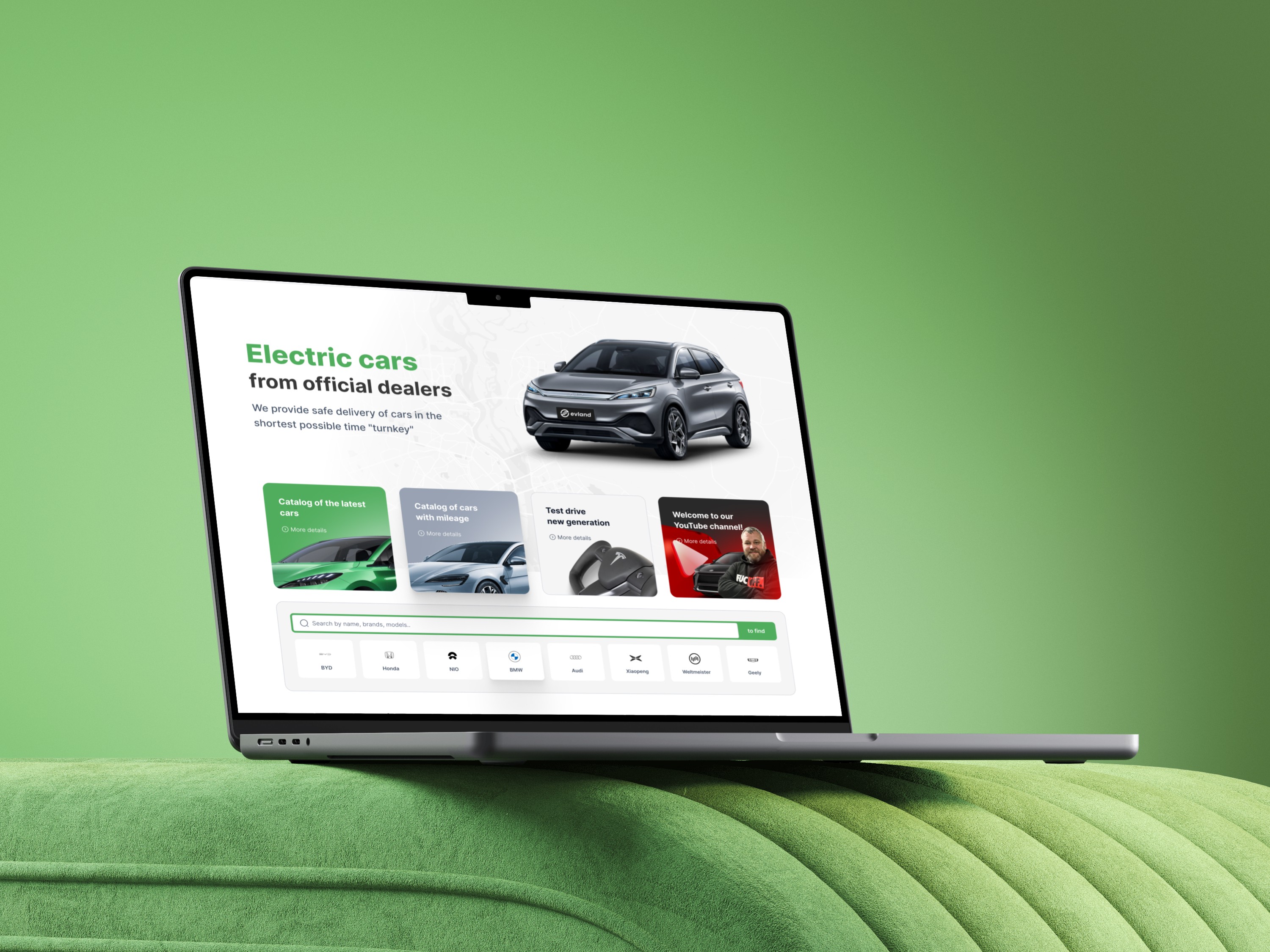
EVLand is a platform for buying and importing electric vehicles from China. It covers the path a buyer takes — browsing new, in-stock and used inventory, comparing models, making sense of battery and charging specs, arranging financing, booking a test drive — and the internal side the sales team works in once an enquiry arrives.
I owned product design across both: research, UX, interfaces and the design system, plus the internal CRM and dashboards. The platform now sustains itself on organic traffic.
A separate product from Charge Spy, built for the same group: Charge Spy handles charging, EVLand handles buying the car.
Client:
Evland
Service:
Web design
Date:
2024


The Challenge
Buying an electric car from China is a large purchase made on unfamiliar ground. The brands are new to most buyers, the numbers that matter — battery capacity, real range, charging standard — aren't ones people have learned to read, and the purchase runs through an import process most have never seen: export paperwork, shipping, customs, certification, registration.
That made the design problem one of confidence rather than browsing. A catalogue answers what is available. It doesn't help someone choose between two cars they've never heard of, or know what they're committing to when they pay before the car has left China.
The second half of the problem was invisible from the outside. Every enquiry lands on a small sales team who need to know which car, which office, what stage of import, what was already promised. That work was running on messages and spreadsheets, and it was the part that decided whether a buyer felt looked after or forgotten.
With one designer and one developer, scope discipline mattered more than ambition. Anything designed had to be worth the only engineering capacity there was.


The Solution
FOR BUYERS
In stock and incoming in one view. Cars already on the lot and cars still in transit sit in the same table, because someone who can wait three weeks shouldn't have to look in two places to find that out. Status carries the location — on the lot in Kyiv, on the lot in Vinnytsia, or in transit — with an expected arrival date next to it, so "can I come and see it this weekend?" is answered on the page instead of on a call.
Stock as a table, not a gallery. For cars available now the decision is narrow and comparative — model, year, interior and exterior, price, arrival. Columns let those line up and be read down the page, which is how someone choosing between two cars in the same week actually reads. Card grids look better in a portfolio and work worse here.
FOR THE SEALS TEAM
An internal CRM designed around the actual sale. Enquiries, vehicles, offices and import stages in one place, structured the way the team already talks about a deal rather than the way a generic CRM would model it.
Dashboards for the states that get checked daily. Built for people reading between calls, where the answer has to be visible at a glance rather than assembled from a report.
DESIGN SYSTEM
A shared component and token set behind the platform, so new models and services are assembled from existing patterns instead of drawn each time.


The Impact / Achievements
The platform pays for itself. EVLand runs on organic traffic and sustains itself without ad spend — search is the acquisition channel, and the catalogue is what earns it.
150,000+ indexed pages across a catalogue kept in sync with live dealer inventory, refreshed every six hours. Page structure and hierarchy had to work for a first-time buyer and for search at the same time.
300+ daily active users, growing, with an average session around 10 minutes. Long sessions on a platform where a session means comparing cars rather than browsing.
Sales moved off spreadsheets. Enquiries, stock and import stages now live in one internal tool instead of being reconstructed from messages.
Commercial metrics — conversion, leads, sales — sit with the client and aren't mine to publish. Happy to walk through what we tracked in a conversation.
